Getting Started with Kayaking: A Guide for Beginners
Introduction to Kayaking
Introduction to Kayaking
Have you ever wanted to explore the calm waters of a serene lake or the thrilling waves of the ocean with a kayak? Kayaking offers an amazing opportunity to connect with nature, stay fit, and have a great time. If you're new to kayaking, you might be wondering how to get started. This guide is here to help you embark on your kayaking journey with confidence.
Types of Kayaking
First, let's talk about the various types of kayaking. There's recreational kayaking, which is perfect for beginners and takes place on calm waters like lakes and slow-moving rivers. Then, there's touring or sea kayaking, which involves longer trips on larger bodies of water. Finally, whitewater kayaking is for adrenaline junkies who seek the thrill of navigating through fast-moving rivers with rapids and obstacles.

Essential Kayaking Equipment
To get started with kayaking, you'll need some essential gear. Here's a rundown of what you'll require:
Kayak
Obviously, the most crucial piece of equipment is the kayak itself. Kayaks come in different shapes and sizes, designed for various types of water and skill levels.
Paddle
A paddle is necessary to propel yourself through the water. Paddles come in various lengths and materials, so it's essential to choose one that's suitable for your kayak and body size.
Personal Flotation Device (PFD)
A PFD, also known as a life jacket, is a must-have for safety while kayaking. Choose a PFD that fits comfortably and offers good buoyancy.
Clothing
Wear clothing that's appropriate for the water temperature and weather conditions. Synthetic materials that dry quickly are recommended. Avoid cotton, as it retains moisture and can make you feel cold.
Safety Equipment
Some additional safety gear you should consider includes a whistle, a bilge pump, a paddle float, and a dry bag for your personal belongings.
Choosing the Right Kayak for You
Factors to Consider
When selecting a kayak, keep these factors in mind:
- Purpose: Consider the type of kayaking you plan to do, as this will determine the best kayak style for your needs.
- Size and Weight: Your height, weight, and leg length will impact the appropriate size and fit of the kayak.
- Material: Kayaks are made from various materials, each with its pros and cons. Common materials include polyethylene, ABS plastic, and composite materials like fiberglass and carbon fiber.

Learning the Basic Paddling Techniques
Before hitting the water, it's essential to learn some basic paddling techniques to help you maneuver your kayak efficiently and safely.
Proper Paddling Posture
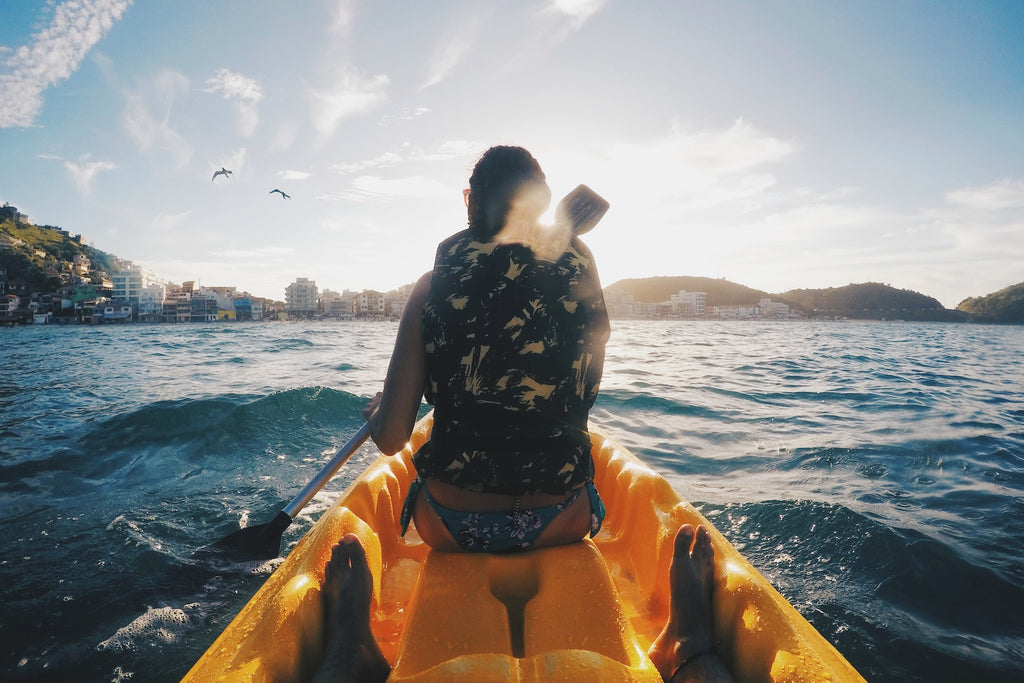
Sit upright in your kayak with your feet resting on the footpegs and your knees slightly bent. Hold the paddle with a relaxed grip and keep your arms shoulder-width apart.
Forward Stroke
The forward stroke is the most basic and frequently used paddling technique. To execute it, submerge one paddle blade into the water near your toes and pull it back towards your hip while keeping the other blade out of the water. Alternate sides to propel your kayak forward.
Sweep Stroke
The sweep stroke helps you steer your kayak. To turn your kayak, place the paddle blade in the water near your toes on the side opposite of the direction you want to turn. Sweep the paddle in a wide arc towards the stern of the kayak. Reverse the motion on the other side to complete the turn.
Safety Tips for Kayaking
Safety should always be your top priority when kayaking. Here are some tips to keep you safe on the water:
Weather and Water Conditions
Check the weather forecast and water conditions before heading out. Be cautious of strong winds, currents, and rapidly changing weather.
Stay Within Your Skill Level
Don't attempt to kayak in conditions beyond your experience and skill level. As you become more experienced, you can gradually tackle more challenging waters.
Practice Self-Rescue Techniques
Learn and practice self-rescue techniques, such as the wet exit and assisted rescue, to ensure you can recover from a capsize or other incidents on the water.
Summary
Getting started with kayaking is an exciting and rewarding experience. With the right equipment, knowledge of basic paddling techniques, and a focus on safety, you'll be well on your way to enjoying this fantastic outdoor activity. Remember, The Salty Shack is here to help you with all your kayaking needs, from finding the perfect kayak to offering expert advice on gear and techniques. Visit us online or in-store today to get started on your kayaking adventure!
FAQs
Q: How do I choose the right kayak for me?
A: Consider factors like the type of kayaking you plan to do, your size and weight, and the material of the kayak. Visit The Salty Shack for personalized advice and a wide range of kayaks to choose from.
Q: What should I wear while kayaking?
A: Opt for synthetic, quick-drying clothing that's appropriate for the water temperature and weather conditions. Avoid cotton, as it retains moisture.
Q: How can I improve my kayaking skills?
A: Practice makes perfect! Spend time on the water, and consider taking lessons or joining a kayaking club to learn from more experienced paddlers.
Q: What safety gear should I have while kayaking?
A: In addition to a well-fitting PFD, consider carrying a whistle, a bilge pump, a paddle float, and a dry bag for your personal belongings.
Q: Where can I find more information and resources about kayaking?
A: The Salty Shack is a great starting point for all your kayaking needs. Visit our website or stop by our retail store for expert advice, gear, and support.
RECENT POSTS